
Invisible in search
One single page trying to cover everything, a generic title, not a single term your customer actually types. Google has nothing to classify, so you depend entirely on ads and referrals to exist.


A website isn't an online pamphlet. It's the structure where your brand gets found, compared, and chosen. KCLOCK builds websites with information architecture, technical on-page SEO, an editable CMS, and conversion paths designed page by page, with fixed scope and deadline in the contract.
A website isn't an online pamphlet. It's the structure where your brand gets found, compared, and chosen. KCLOCK builds websites with information architecture, technical on-page SEO, an editable CMS, and conversion paths designed page by page, with fixed scope and deadline in the contract.
Most company websites serve a single function: proving the company exists. It's there, it looks nice, nobody visits it. It doesn't show up in search, doesn't answer the questions that come before a purchase, and offers no path for a visitor to become a lead.
A website is the only digital asset that works 24 hours a day without you paying per click. When the structure is built right, every page is a new entry point. When it's built wrong, it's a fixed cost that gives nothing back.
One single page trying to cover everything, a generic title, not a single term your customer actually types. Google has nothing to classify, so you depend entirely on ads and referrals to exist.
Every page built by a different hand, in a different tone, with a different button. Visitors feel the inconsistency before they can rationalize it, and inconsistency reads as amateur.
Changing a price or publishing an article means opening a ticket and waiting. The site stiffens up, content stops, rankings starve to death, and marketing ends up taking the blame.
All of these items are standard scope, not a premium package. It's what separates a website that sustains business growth from one that just occupies a domain.
A page map built from your customer's real questions and the terms they actually search for. A clear structure ranks better and sells better.
Copy that says what you do, who it's for, and why you instead of the competitor. No "innovative solutions": concrete language your customer actually recognizes.
Typography, color, spacing, and components defined. The site grows without turning into a patchwork: every new page is born inside the brand's identity.
URLs, heading hierarchy, meta tags, sitemap, structured data, and internal links. The technical foundation that lets Google understand and classify you.
Works the same on mobile, tablet, and desktop, with contrast and keyboard navigation handled properly. Accessibility is also market reach.
Image weight, loading, and visual stability under control. A slow site loses visitors before there's ever a chance to sell.
You publish pages, articles, and text changes without depending on a vendor, with usage training included at delivery.
GA4, Pixel, Ads, and every contact point on the site measured. You see which page generates leads and which one just consumes attention.
Information architecture is the invisible work that determines whether the site will rank and convert. This is where we decide how many pages exist, what each one answers, which term each one targets, and how they support each other through internal links.
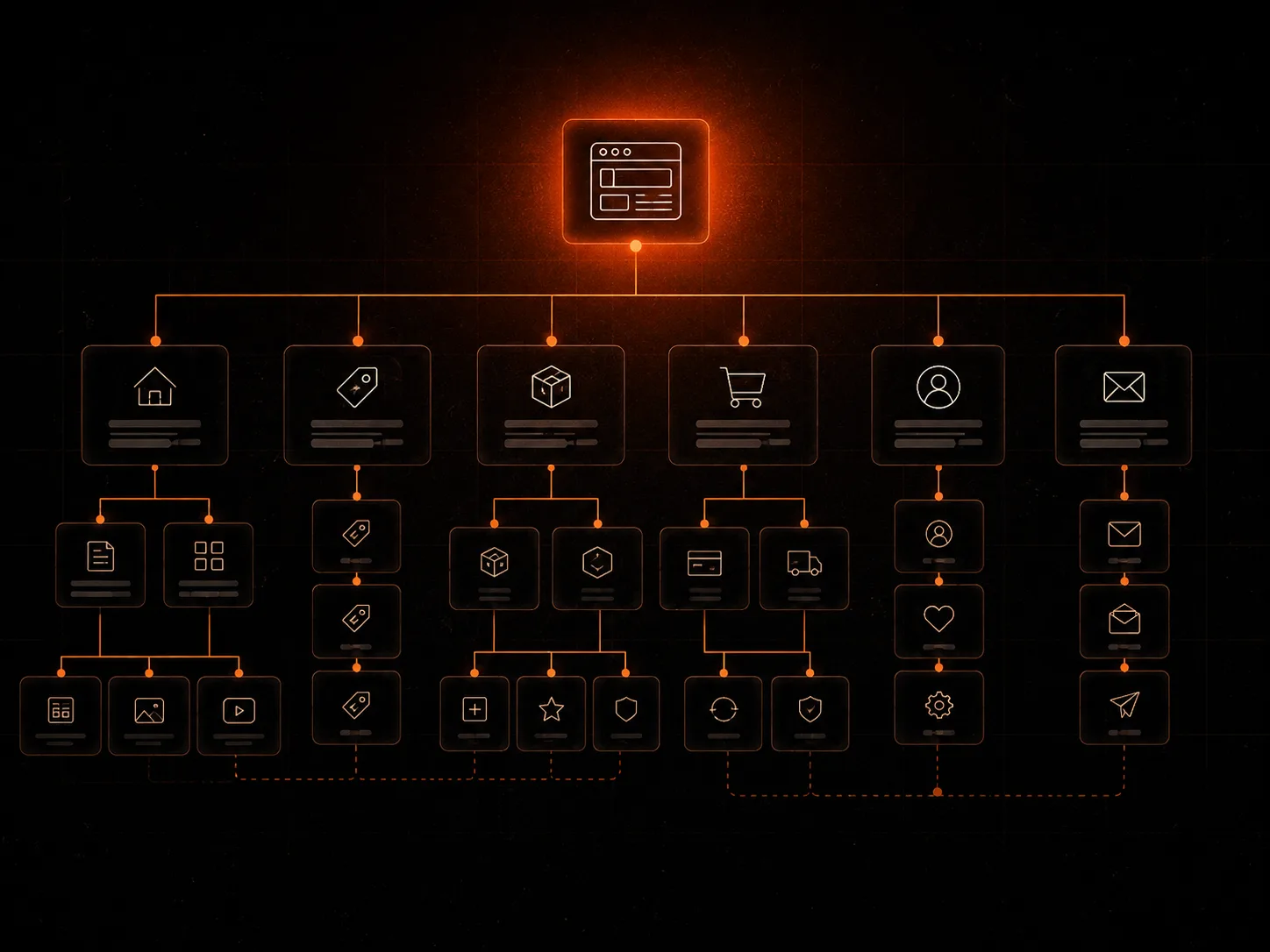
We map out what your customer types at each stage: who's researching the problem, who's comparing solutions, and who's ready to hire. Every intent calls for a different page.
We define the list of pages and the hierarchy between them. The homepage doesn't try to sell everything: every service gets its own depth, with room to actually make its case.
Every page gets a declared job: rank for a term, educate, prove credibility, or convert. A page with no defined function is dead weight in the structure.
Content pages feed service pages, which feed conversion. This distributes authority within the site itself and guides the visitor along the buying path.
The structure is designed to take the tenth page and the hundredth page with no rebuild. Growing shouldn't require starting over.
Form, WhatsApp, and CTA placed where intent is ripe, not pushed on every corner. Pressure in the wrong place kills trust.
These are baseline items we deliver configured and verified. None of them guarantees the top spot on its own: they remove the technical reasons that keep your site from competing.
sitemap.xmlall pages declared and kept up to daterobots + canonicalno duplicate page competing with youschema.orgstructured data for organization and servicecore web vitalsloading, responsiveness, and visual stabilityh1–h3 hierarchysemantic structure a machine can readopen graphcorrect appearance when shared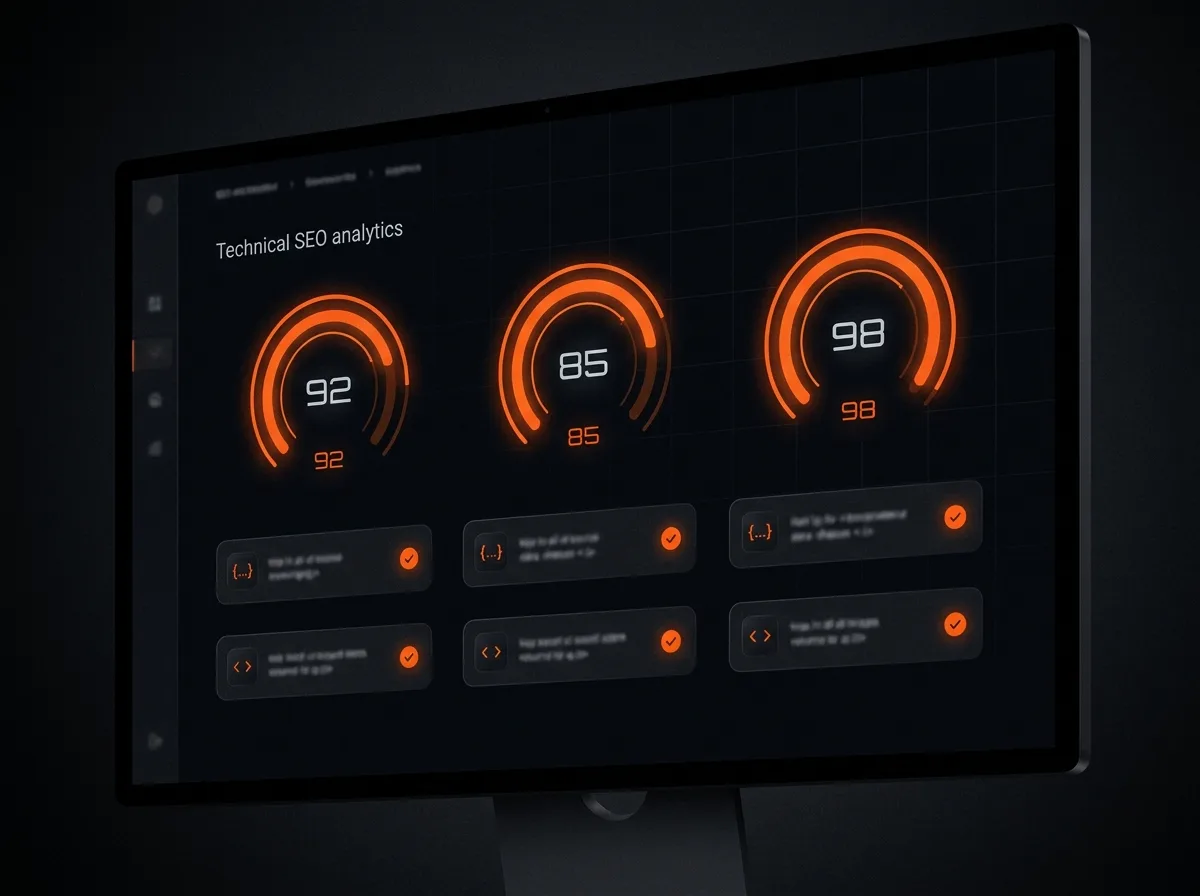
Website projects stall when nobody knows whose job it is. We define deliverables, owners, and dates before we start, and you follow along in a staging environment from the moment the first page is ready.
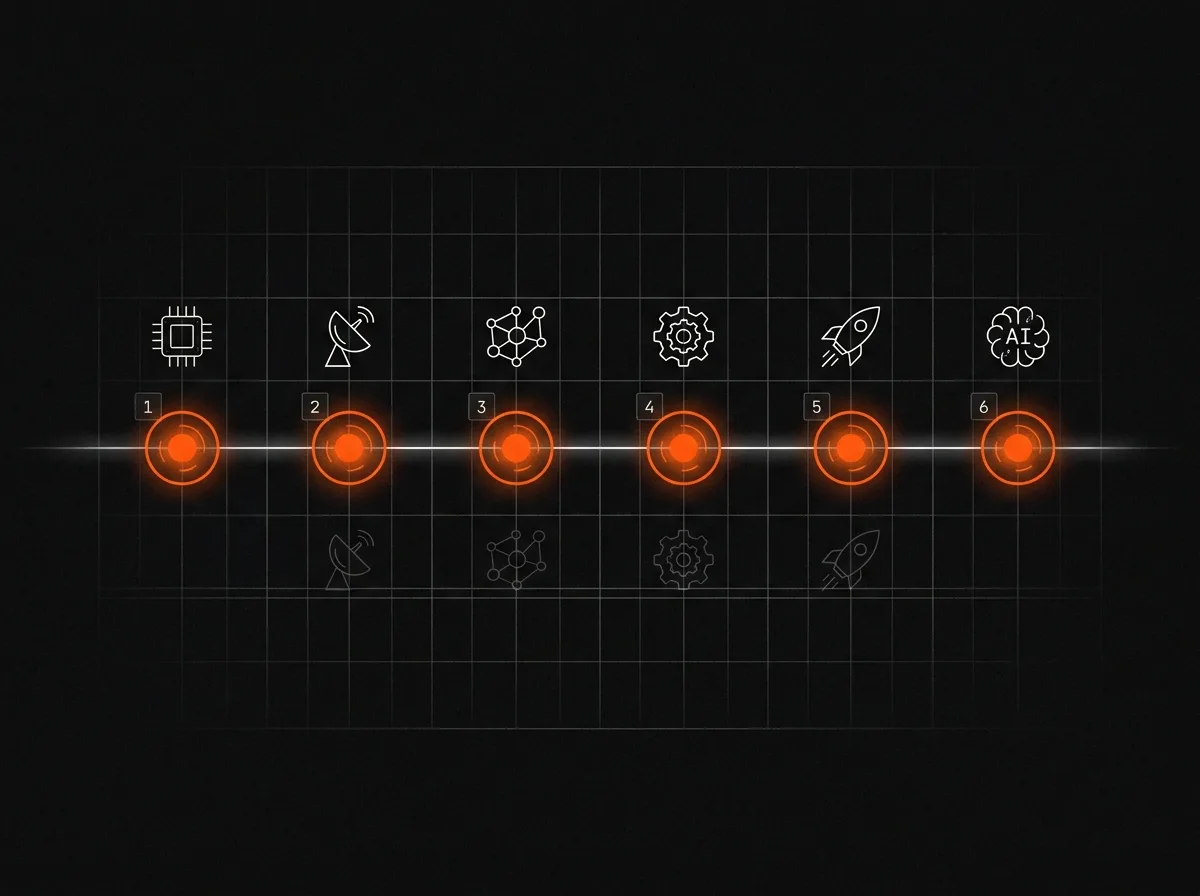
Business, competitors, audience, and the site's objective. Without this, everything else is decoration. This is also where we define what the site needs to do for your sales process.
Structure, hierarchy, target terms, and conversion paths designed and approved before any production begins.
Pages written with positioning, proof, and a call to action. You review and approve page by page, with no surprise at the end.
We define the brand's components and apply them across the pages. The system guarantees consistency now and two years from now.
Responsive build, technical SEO applied, CMS configured, and content migrated. Everything tested on real devices.
Domain, SSL, tracking validated, redirects from the old site, and training for your team on the CMS. Access and documentation handed over.
If you need to convert a specific campaign right now, a landing page delivers faster with surgical focus. If you need to be found, compared, and remembered over time, the website is the asset. The right order between the two depends on where your business is today, and that's exactly what the diagnostic figures out.
Didn't find your question? Ask directly during the diagnostic. It's free, and there's no ready-made proposal waiting for you.
The price depends on the size of the structure: a five-page corporate website and a site with dozens of service pages, a blog, and a content section have very different scopes. After the diagnostic, you get fixed scope, timeline, and price, all written into the contract, with no surprise cost along the way. The diagnostic is free.
Tell us what your business sells and who you need to reach. We'll send back a structural read before any quote.
We reply within 24h. No commitment.